

Written by: Bonnie Feldman, DDS, MBA, Becca Malizia, BS
Recent research has begun illuminating the potential therapeutic benefits of curcumin, the main component of turmeric (1). Research shows that curcumin acts as a powerful antioxidant, and therefore is a naturally strong anti-inflammatory (2, 3, 4). Anti-inflammatory foods are of great importance to autoimmune patients as they should help decrease symptom severity and could prevent flare-ups. While curcumin supplements are widely available, it is unclear whether they are an effective way to get the powerful antioxidant circulating in the blood. Consuming turmeric in food form may still be the optimal way to get curcumin into your body! Check out our article on immune boosting foods for more information. Here are some of our favorite turmeric recipes:
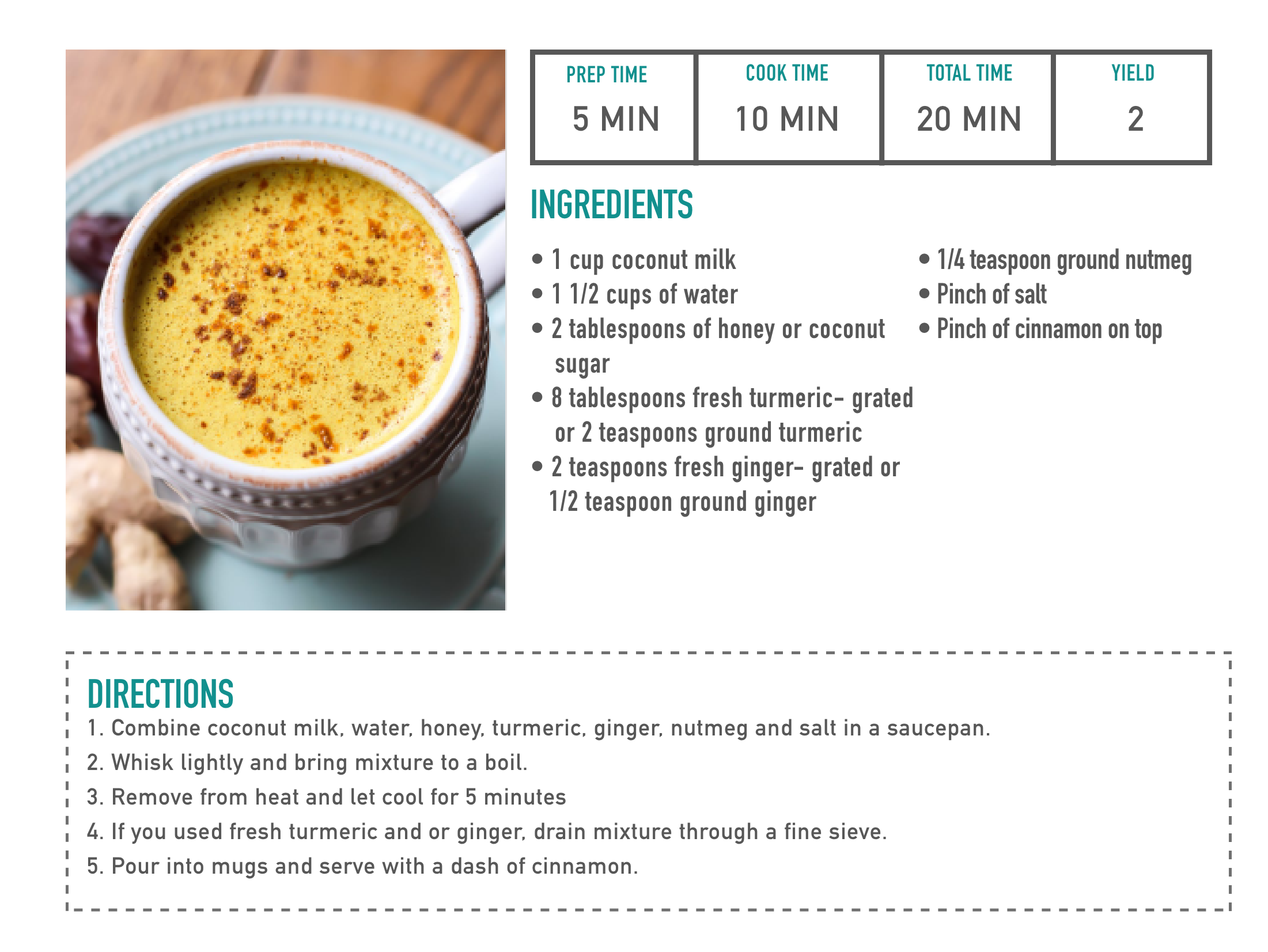
Turmeric- Ginger Coconut Milk Latte

Adapted from bonappetite and fitmittenkitchen
Turmeric Hummus

Adapted from savorynothings
Turmeric Pomegranate Rice

Adapted from bonappetite
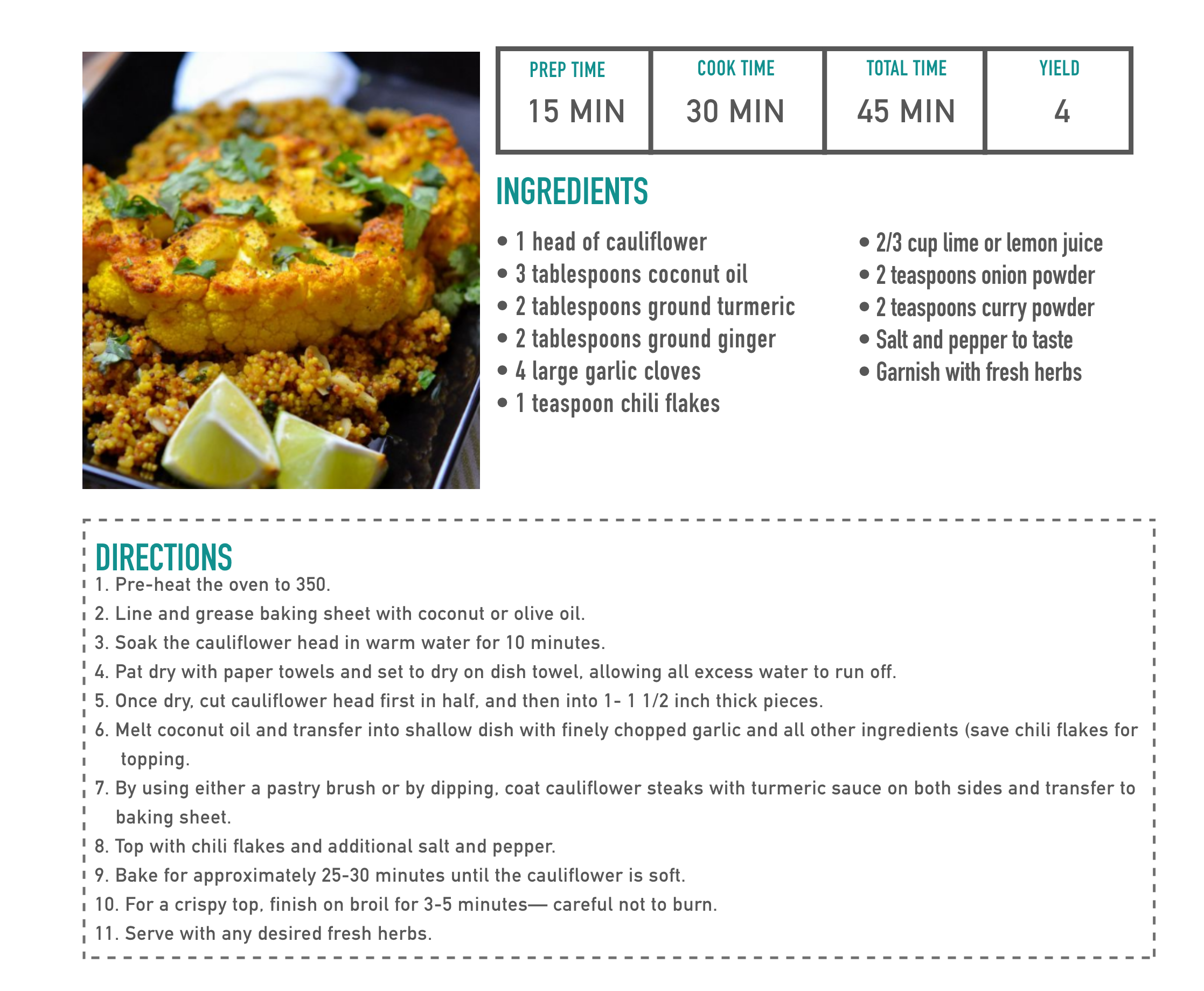
Cauliflower Turmeric Steaks

Adapted from turmeric.com and berlinfullofbeans
Mango Coconut Turmeric Cupcakes

Adapted from nirvanacakery
Which one is your favorite? Do you have a different recipe you love that we should try? Comment below!
References:
- Aggarwal, Bharat; Harikumar, Kuzhuvelil. “Potential therapeutic effects of curcumin, the anti-inflammatory agent, against neurodegenerative, cardiovascular, pulmonary, metabolic, autoimmune and neoplastic diseases.” The International Journal of Biochemistry & Cell Biology. Vol 41(1). 2009. 40-59. https://www.sciencedirect.com/science/article/pii/S1357272508002550
- Chipault, J.H. et al. “The Antioxidant Properties of Natural Spices.” Journal of Food Science. 1952. https://onlinelibrary.wiley.com/doi/abs/10.1111/j.1365-2621.1952.tb16737.x
- Motterlini, Roberto et al. “Curcumin, an antioxidant and anti-inflammatory agent, induces heme oxygenase-1 and protects endothelial cells against oxidative stress.” Free Radical Biology & Medicine. Vol 28(8). 2000. 1303-1312. https://www.sciencedirect.com/science/article/pii/S089158490000294X
- Ukil, A. et al. “Curcumin, the major component of food flavour turmeric, reduces mucosal injury in trinitrobenzene sulphonic acid-induced colitis.” British Journal of Pharmacology. Vol 139(2). 2003. 209-218. https://www.ncbi.nlm.nih.gov/pubmed/12770926





0 Comments